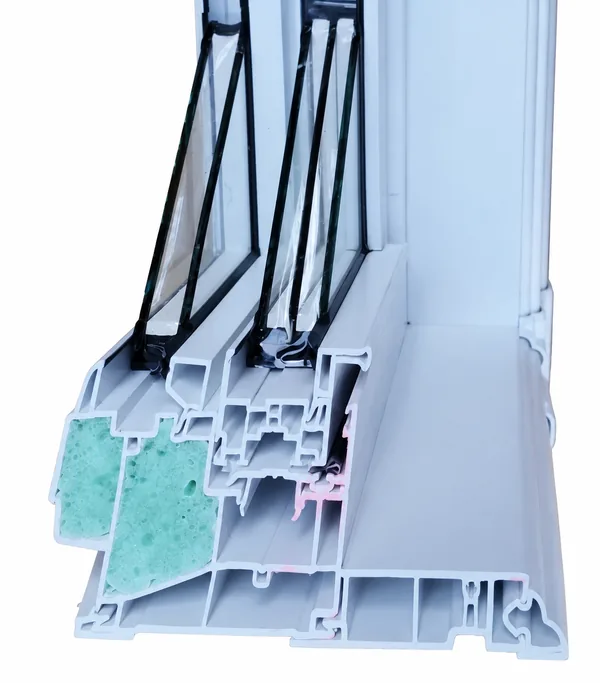
Understand your glass options
See double and triple panes, Super Spacer and the performance numbers that help compare the options for your rooms.





Serving homeowners across the GTA and selected Ontario service communities, including Barrie, Hamilton, Guelph, Cambridge and Kitchener-Waterloo.
Request a Free Window Replacement Quote
Falcon WD provides professional residential window replacement and installation across the Greater Toronto Area and selected Ontario service communities, including Barrie, Hamilton, Guelph, Cambridge and Kitchener-Waterloo.
We help homeowners replace dated, drafty, damaged or inefficient windows with custom-sized vinyl windows selected for energy efficiency, comfort, appearance and long-term performance. Every project begins with accurate measurements and a review of the window styles, glass packages and installation methods suitable for the home.
Whether the project includes a few windows, a full-home replacement, or windows and exterior doors together, our team provides clear communication from the initial consultation through installation, exterior finishing and cleanup. Free in-home estimates are available within Falcon WD’s confirmed service area.
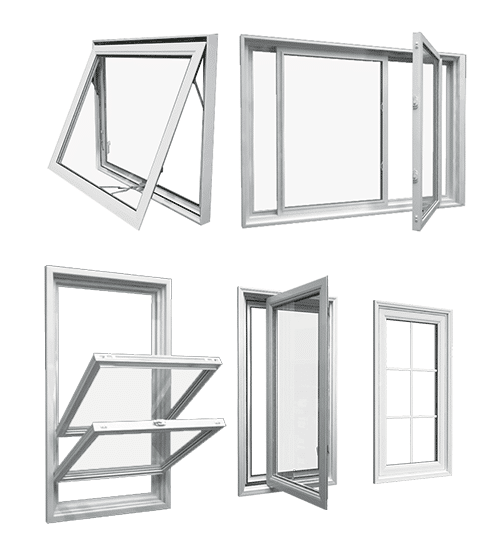
Window replacement is the process of removing an existing window system and installing a new, properly measured unit using either a retrofit or full-frame installation method. The best method depends on the condition of the existing frame, signs of water damage or air leakage, the desired interior and exterior finish, and the performance goals for the home.
Falcon WD reviews these conditions before recommending a window style, glass package or installation approach. This helps homeowners avoid unnecessary work while ensuring that damaged or poorly insulated components are not left concealed behind a new window.
Consultation and Window Assessment
After the consultation is booked, a Falcon WD specialist will inspect the existing windows, discuss the homeowner’s goals and review the conditions around each opening.
Select the Window Style, Glass and Installation Method
We help you compare suitable window styles, frame configurations, glass packages and installation methods based on the room, opening size, ventilation needs and energy-efficiency goals.
Professional Window Installation
On installation day, the work area is protected before the existing windows are removed. The openings are prepared and the new windows are installed, insulated, levelled, secured and sealed according to the approved project scope.
Final Inspection, Cleanup and Disposal
Before the project is completed, the installed windows are checked for smooth operation, proper locking, sealing and finishing. The work area is cleaned and the removed windows and installation debris are taken away.
The energy performance of a replacement window depends on the complete system: the frame, glass package, spacer, weatherstripping, hardware, installation method and the quality of the air and water seal around the opening. Selecting the most expensive glass package is not automatically the best choice for every room or every home.
Double-pane windows can provide a strong balance of energy efficiency, natural light and project cost when paired with an appropriate Low-E coating, gas fill and professional installation.
Triple-pane windows may improve interior glass temperatures, comfort and sound reduction in suitable applications. They are often considered for colder rooms, larger openings, exposed elevations and homeowners seeking higher performance.
Low-E coatings help manage heat transfer and solar heat gain, while insulated glass units may use argon gas and warm-edge spacer technology to improve performance around the perimeter of the glass. Falcon WD reviews available glass packages based on window orientation, room use, comfort concerns and the selected window system.
Homeowners concerned about moisture should also review our guide to condensation on windows, because indoor humidity, ventilation and outdoor temperature can affect condensation even when a window is operating correctly.
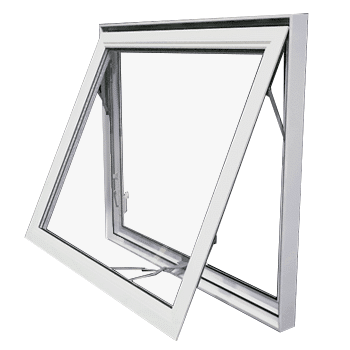
Awning Window
Awning windows are hinged at the top and open outward from the bottom. They provide ventilation while helping protect the opening from light rain and are useful in bathrooms, basements, kitchens and combinations with larger fixed windows.
The compression-style seal can support strong energy performance when the window is properly sized and installed. Learn more about awning window replacement.
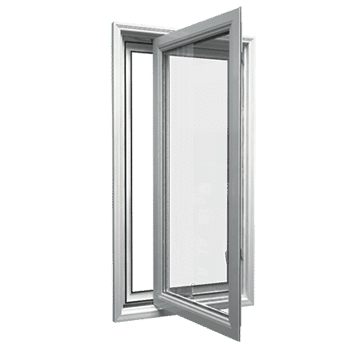
Casement Window
Casement windows are hinged at the side and open outward with a crank. They can open wide for ventilation and are easy to clean from inside the home on many configurations.
When closed, the sash presses against the weatherstripping to create a tight seal, making casement windows a popular energy-efficient option. Learn more about casement window replacement.
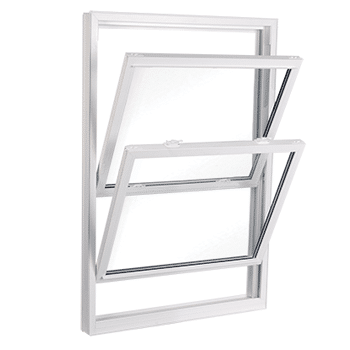
Double Hung Window
Double hung windows have two vertically sliding sashes. Depending on the selected model, both sashes can be operated and tilted inward to simplify cleaning from inside the home.
This traditional style is well suited to bedrooms, living areas and homes where a classic appearance and flexible ventilation are priorities. Learn more about double hung windows.
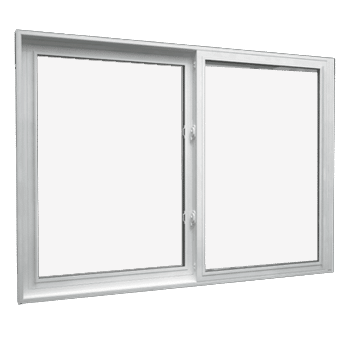
Slider Window
Slider windows open horizontally, with one or more sashes moving along the frame. They are simple to operate, require little interior or exterior clearance and work well in bedrooms, basements and other wide openings.
Slider windows are low-maintenance and are available in several operating configurations. Learn more about slider window replacement.
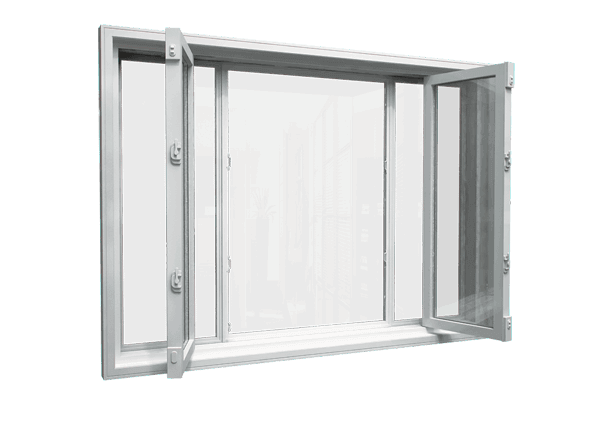
End Vent Slider Window
End vent slider windows combine a wide fixed centre section with operating sliding sashes at both ends. This configuration provides a broad view, balanced ventilation and a practical option for large horizontal openings.
The removable or lift-out sash design available on selected systems can also simplify cleaning. Learn more about end vent slider windows.
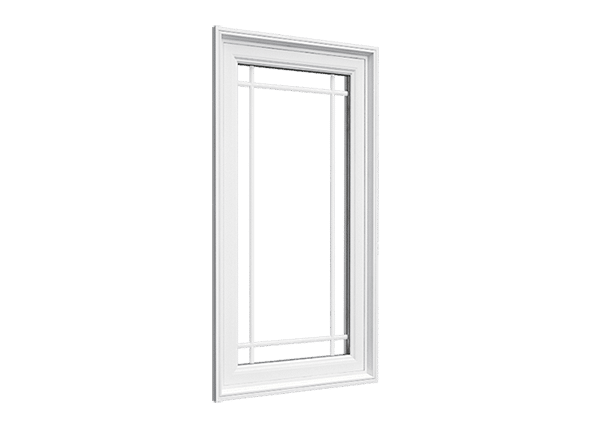
Fixed Casement Window
Fixed casement windows do not open, but they use a frame profile designed to visually match nearby operating casement or awning windows. They are appropriate where natural light and a consistent exterior appearance are required but ventilation is not necessary.
They can be used alone or within custom window combinations. Learn more about fixed casement windows.
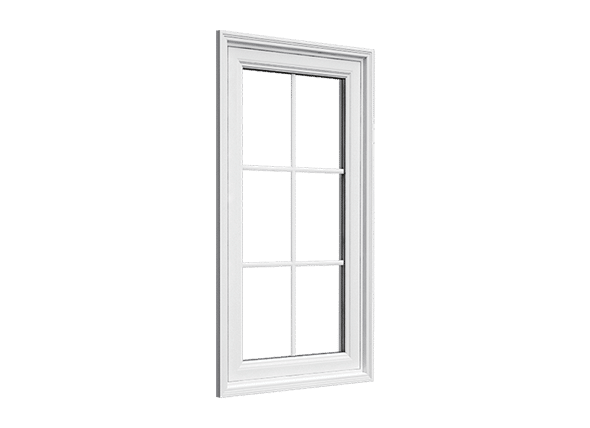
Picture Window
Picture windows are non-operating windows designed to provide natural light and an unobstructed view. They are often used for larger openings or combined with casement, awning, hung or slider windows to add ventilation.
Custom sizes, grille patterns and frame combinations allow picture windows to suit both modern and traditional homes. Learn more about picture windows.
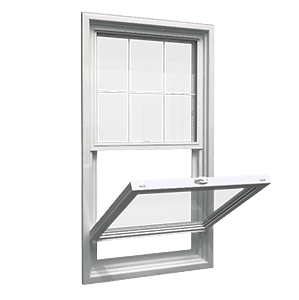
Single Hung Window
Single hung windows have a fixed upper sash and an operating lower sash that moves vertically. This traditional design provides ventilation through the lower portion while maintaining a simple, familiar appearance.
Single hung windows can be a practical option for bedrooms and living areas where vertical operation is preferred. Learn more about single hung windows.
Homeowners looking for a European-style inward-opening and tilt ventilation system can also explore our tilt-turn window options.
BRICK-TO-BRICK / FULL-FRAME
RETROFIT
STUD-TO-STUD
The right installation method cannot be selected from the window size alone. Falcon WD considers the condition of the existing frame, water staining, rot, air leakage, wall construction, exterior cladding, interior trim, desired glass area and the homeowner’s budget before recommending retrofit, brick-to-brick or stud-to-stud replacement.
The recommended method and all included finishing work are identified in the written quote before the project is ordered.
View examples of completed work in our window and door installation gallery, or review answers to common questions in the Falcon WD FAQ.
Falcon WD serves residential window replacement projects across the GTA and selected surrounding Ontario communities, including Vaughan, Markham, Richmond Hill, Aurora, Newmarket, King City, East Gwillimbury, Stouffville, Uxbridge, Mississauga, Oakville, Burlington, Milton, Caledon, Ajax, Pickering, Whitby, Oshawa, Barrie, Hamilton, Guelph, Cambridge and Kitchener-Waterloo.
Project availability depends on the address, number of windows, installation scope and scheduling. Contact Falcon WD with the project location to confirm service availability.
Retrofit installation may be suitable when the existing frame is dry, stable and properly insulated. Full-frame replacement is generally recommended when the frame, insulation or surrounding installation is damaged, inefficient or unsuitable for reuse. Falcon WD confirms the recommended method after inspecting the existing windows.
Yes. Final measurements are taken before the selected window system is ordered. Window style, frame configuration, colour, glass package and installation details are confirmed as part of the written quote.
The best choice depends on the room, window size, orientation, comfort concerns, sound reduction goals and budget. Double-pane windows can provide strong performance in many homes, while triple-pane windows may improve interior glass temperatures and comfort in suitable applications.
The exact scope is listed in the written quote. A typical replacement project may include removal of the old windows, installation and insulation of the new units, exterior sealing and finishing, cleanup and disposal. Interior trim, jamb extensions and other finishing items are included when specified.
Yes. Free in-home estimates are available for qualifying residential window replacement projects within Falcon WD’s confirmed Ontario service area.
Yes. Falcon WD also supplies and installs exterior entry doors and sliding patio doors. Windows and exterior doors can be quoted and coordinated together when appropriate for the project.
Start with the rooms you want to improve. Tell us about cold surfaces, moving air, afternoon glare, awkward handles or a view you want to preserve. Then compare the complete window and installation—not one headline specification.
See double and triple panes, Super Spacer and the performance numbers that help compare the options for your rooms.
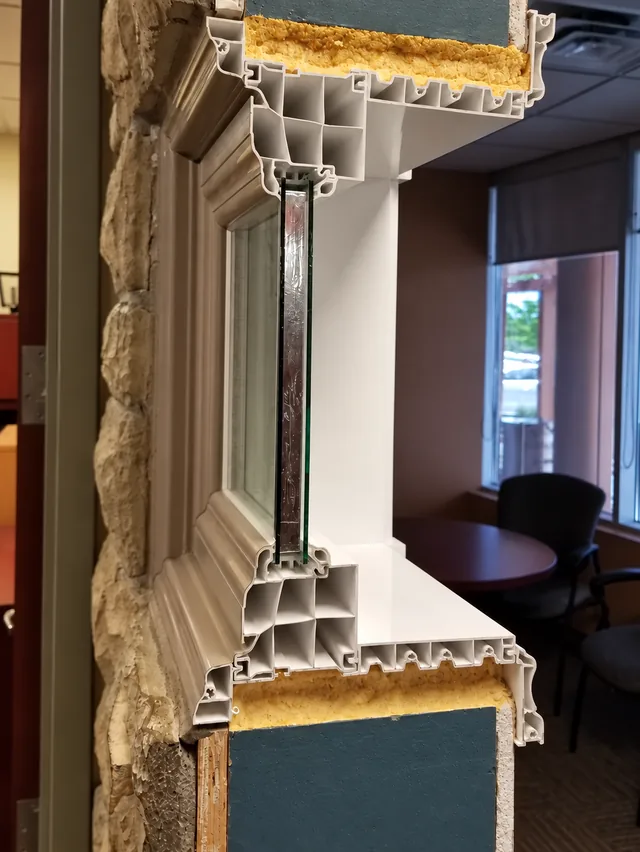
Separate routine care from a problem that needs attention. Understand why the condition of the existing frame changes the next step.
Technical demonstration samples, not finished customer installations. The installation sample’s display sign was digitally removed.
Tell us the project city, approximate number of windows, preferred styles and any concerns with the existing openings. Photos from inside and outside can help our team understand the project before an in-home appointment is arranged.






CLIENTS REVIEW
15 White Vinyl Windows — Hamilton Project
READ MORE ⟶
Fiberglass Entry Door with Sidelights — Guelph Project
READ MORE ⟶
Bay and Bow Window Replacement in the GTA
READ MORE ⟶




